Off-grid power you can bet a trip on. This collection covers every 12V and USB power scenario you'll hit at a campsite, trailhead, or in a real emergency: lithium jump starters that self-recover a dead vehicle battery in under two minutes, solar power banks that recharge in the field, and power stations sized for Starlink Mini and basecamp electronics.
What belongs in a camping power kit?
1. A jump starter (non-negotiable). The POD-XTREME delivers 1,000+ peak amps for 12V gas and light-duty diesel engines — cars, trucks, SUVs, boats, ATVs — with 20+ starts per charge. No cell signal required, no second vehicle, no waiting for a tow.
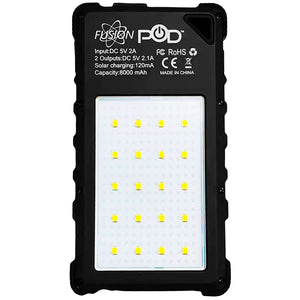
2. Solar recharge capability. The Fusion Solar Power Bank tops itself up from sunlight, so multi-day trips don't drain your reserve.
3. Basecamp power. The Star Power 600 keeps a Starlink Mini and camp electronics running off-grid.
Camping power FAQ
Jump starter vs. power station for camping — which do I need? A jump starter is smaller, cheaper, and can start your vehicle; a power station stores more energy for running devices for days. Most campers should carry a jump starter first — it covers the trip-ending failure — and add a power station for extended off-grid stays.
How should I store a jump starter between trips? Keep it in a cool, dry place, out of direct sun, and top up the charge before every trip. Lithium units hold a charge for months in storage.
Will cold weather affect it? Lithium jump starters lose some capacity in freezing temperatures. Keep the unit inside your tent or cab overnight in winter, and warm it before use for full cranking power.